

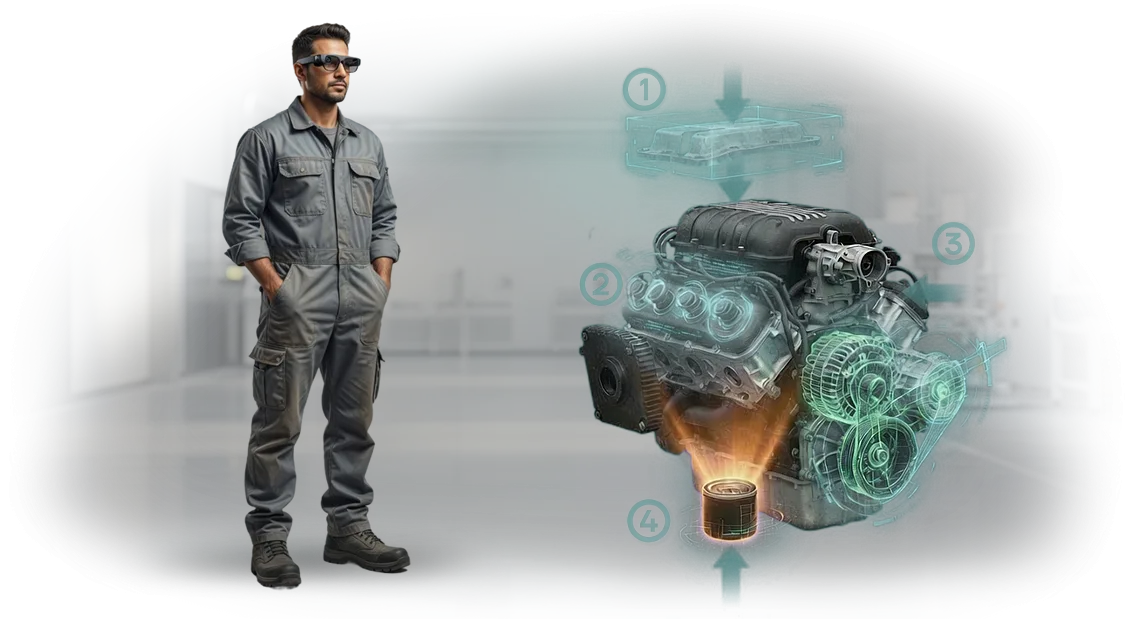
הוראות AR לציוד חליבה: מדוע השבתות פוגעות בתפוקת החלב
כשל בקו החליבה כמעט תמיד מתרחש בתזמון הגרוע ביותר: חליבת הבוקר בעיצומה, המפעילים ממתינים, והטכנולוג מדפדף בהוראה מודפסת בחיפוש אחר הרכיב הנדרש.
כל דקת השבתה היא לא רק אובדן תפוקת חלב, אלא גם עיכוב של כל לוח הזמנים, לחץ על בעלי החיים ועל האנשים, וסיכון שגם חליבת הערב תתנהל שלא כשורה. ככל שהקו מושבת זמן רב יותר, כך ההתאוששות יקרה יותר.
הבעיה אינה שאין לצוות שלכם הוראות — יש, ולעיתים עבותות. הבעיה היא שברגע התקלה אף אחד לא קורא 40 עמודים של טקסט. יש צורך בתשובה כאן ועכשיו: איזה רכיב, מה לבדוק, באיזה סדר לפעול. נייר ו-PDF לא עובדים כך — מדפדפים בהם, מאבדים את המקום, מפרשים אותם באופן שונה.
בדיוק את הכאב הזה פותרות הוראות AR לציוד חליבה: ההנחיה מופיעה ממש מעל הרכיב שהמפעיל רואה לנגד עיניו.
סיפור נפרד הוא הדרכת מפעילי חליבה. עובד חדש יוצא למשמרת או שהוא הולך אחרי חונך מנוסה, או שהוא לומד בשיטת הניסוי והטעות, וכל טעות היא סיכון לציוד ולבעל החיים. עם הוראות AR האדם עובר תרחיש על הרכיב האמיתי, רואה את רצף השלבים וזוכר אותו בידיים, ולא בעיניים מתוך טקסט. זמן ההגעה לעבודה עצמאית מתקצר, והעומס על החונכים פוחת.
הדבר נכון גם לתיקון ציוד חליבה. כאשר השבתת קו החליבה נמדדת בדקות, חשוב לא השלמות של המדריך, אלא המהירות של הפעולה הנכונה. ההוראה מובילה את המומחה שלב אחר שלב, מראה היכן לחפש את הסיבה, ולא מאפשרת לדלג על בדיקה שבגללה התקלה תחזור כעבור משמרת.
אנו בונים פתרונות כאלה בהתאמה לציוד הספציפי של המשק — בהתחשב ברכיבים שלכם, בתקנות ובדרך שבה המשמרת שלכם באמת עובדת.
מה מקבל המשק מהטמעת הוראות AR
הטמעת הוראות AR לציוד חליבה משפיעה ישירות על שלושה דברים שבעל המשק סופר כל יום: כמה זמן הציוד עובד ללא תקלות, כמה מהר מפעיל חדש מגיע לרמה הנדרשת ועד כמה יציב איכות השירות.
כאשר העובד רואה רמז ישירות על הציוד, הוא לא מחפש נוהל בנייר ולא ממתין לטכנאי — הפעולות מבוצעות שלב אחר שלב ובסדר הנכון.
צמצום זמן ההשבתה — היתרון הראשון והמוחשי ביותר. ככל שפחות זמן מושקע באבחון ובתיקון התקלה, כך יותר מחזורי חליבה מתבצעים לפי התוכנית וכך יציב יותר נשמרת תפוקת העדר. טעויות בתחזוקה, שבעבר הובילו לקריאות חוזרות למומחה, נעלמות יחד עם רמז חזותי ברור בכל שלב.
הדרכת הצוות מפסיקה להיות תלויה במי שפנוי במשמרת. מפעיל חדש שולט בעבודה עם ציוד החליבה מהר יותר, והמשק לא נקשר לטכנאי מנוסה אחד — הידע נשאר במערכת ולא בראשו של אדם מסוים. זה חשוב במיוחד בגיוס עונתי ובסבב משמרות.
איכות השירות הופכת לצפויה: כל עובד מבצע את הפעולות באותה צורה, לפי אותו תקן. יעילות החליבה עולה לא בזכות עבודה בלחץ, אלא בזכות העובדה שהציוד מתוחזק בזמן ובצורה נכונה. אנו מרכיבים הוראות AR עבור צי הציוד שלכם ותרחישי העבודה האמיתיים של המשק — נדון במשימה ונחזור עם הערכה ותוכנית.
פורמטים של הוראות AR למשימות המשק שלכם
פורמטים של הוראות AR נבדלים לא ב"תוכן" שלהם, אלא באיזו משימה של המשק הם פותרים. אחד צריך להכניס במהירות מפעיל חדש למשמרת, אחר צריך לצמצם השבתות בעת תקלות, ושלישי צריך לקבוע תקן עבודה אחיד בכל החוות. להלן תרחישים טיפוסיים שעבורם אנו מתאימים את הפורמט.
| פורמט | למי מתאים | מה נותן למשק |
|---|---|---|
| הוראה שלב-אחר-שלב לפי מכלול | מפעילים חדשים, עובדים עונתיים | כניסה למשמרת ללא חניכה ממושכת, פחות טעויות בהתחלה |
| מדריך חזותי לתחזוקה | טכנאים, מנהלי צוות | תקנון בהישג יד, פחות השבתות בגלל פירוק שגוי |
| תרחיש הדרכה במקום | מנהל תחום, חונכים | תקן אחיד לכל החוות, הדרכה ללא הינתקות מהעבודה |
| רמזים לאבחון | משמרת תורנית, מפעילי לילה | מאתרים מהר יותר את סיבת התקלה, פחות מזעיקים מומחה חיצוני |
| הוראה להרכבה וכיול | מתקינים, קבלנים | מפעילים את הציוד נכון מהפעם הראשונה |
כיצד לבחור פורמט
צאו מנקודת המוצא היכן הזמן הולך לאיבוד לרוב: בהכנסת אנשים, בתיקונים או בפערים בגישות בין המשמרות. אנו מנתחים את המצב שלכם ומציעים פורמט שמתאים לו, ולא להפך — הלקוח מקבל מדריכים חזותיים שבאמת משתמשים בהם, ולא מניחים אותם בתיקייה.
מה ניתן לשלב
הפורמטים אינם סותרים זה את זה: הוראה שלב-אחר-שלב למפעיל ותרחיש הדרכה לחונך נעשים לעיתים קרובות על בסיס אחד. כך המשק מקבל גם הכנסה מהירה של מתחילים וגם תקן עבודה משותף — ללא כפילות חומרים ובזבוז מיותר של זמן על תיאומים.
איך עובר הפרויקט: מהבריף ועד ההפעלה ברפת
אנחנו בונים את הפרויקט כך שתבינו מה קורה בכל שלב וכמה זמן זה ייקח מכם. את עיקר העבודה אנחנו לוקחים על עצמנו: מכם נדרשים גישה לציוד, מומחה לתהליך התחזוקה ומשוב בשלבי האישור. להלן איך נראה המסלול מהשיחה הראשונה ועד להוראות עובדות ברפת.
- בריף וניתוח משימות. אנחנו דנים אילו מכלולים של ציוד החליבה ואילו פעולות צריך לכסות: תחזוקה יומיומית, שטיפה, החלפת מתכלים, פעולות בעת תקלות. מתעדים מי ישתמש בהוראות — טכנאי, מפעיל או עובד חדש — ואיזו תוצאה נחשבת להצלחה.
- תוכנית ומבנה. אנחנו מציעים רשימת תרחישים, סדר הפיתוח שלהם ולוח זמנים. אתם רואים מה תקבלו בסוף ומתי, עוד לפני תחילת העבודה.
- אישור ההוראות. אנחנו אוספים את הנהלים שלכם ואת הידע של מומחי השירות, מכינים תרחישים ומאשרים אותם עם הצוות שלכם. תיקונים בשלב הזה זולים ומהירים יותר מאשר אחרי ההטמעה.
- יישום. המהנדסים שלנו מצלמים ומרכיבים הנחיות שלב-אחר-שלב המונחות על הציוד האמיתי. אנחנו עובדים על ציוד מקצועי — אתם מקבלים תוצאה יציבה, ולא דגם ניסיוני.
- בדיקה בשטח. אנחנו בודקים את התרחישים ישירות ברפת, יחד עם הטכנאים שלכם: האם ברור היכן לעמוד, מה ללחוץ ולאן להסתכל. מסירים כל מה שמפריע בעבודה האמיתית.
- הפעלה בייצור. אנחנו מלמדים את הצוות, מוסרים את ההוראות והחומרים, ועוזרים להטמיע אותם בתהליכים היומיומיים ובנהלי התחזוקה.
- תמיכה ופיתוח. לאחר ההפעלה אנחנו מלווים: מעדכנים תרחישים כאשר הציוד או התהליכים משתנים, ומוסיפים מכלולים ופעולות חדשים.
סדר עבודה כזה מסיר את הסיכון העיקרי — לקבל פיתוח יפה שאף אחד לא משתמש בו. אנחנו מובילים את הפרויקט עד לרגע שבו באמת משתמשים בהוראות ברפת, ולא עד למסירת הקבצים.
מה ייכלל באספקה: ערכה לצוות שלכם
אתם מקבלים לא אוסף קבצים, אלא כלי עבודה שהצוות יתחיל להשתמש בו מהיום הראשון. הרכב האספקה נקבע כבר בשלב ההתחלה: אתם רואים מראש מה בדיוק יישאר אצלכם לאחר מסירת הפרויקט, ויכולים לתכנן את הכשרת הצוות ואת ההפעלה ברפתות.
- הוראות AR מוכנות לפי הצמתים והפעולות שלכם: חיבור ושטיפה של מכונות חליבה, החלפת גומי פטמות, תחזוקת מערכת הוואקום, הפעלה לאחר תקופת אי-פעילות. כל אחת מהן — שלב אחר שלב, עם רמזים חזותיים מעל הציוד האמיתי.
- מדריכים מודפסים ודיגיטליים לכל תרחיש: תזכירים קצרים למפעילים ותקנות מורחבות למהנדסים ולשירות הטכני.
- הכשרת הצוות: אנו מקיימים מפגשים עם מפעילים ומכיילים, מראים כיצד להפעיל את ההוראות, ומוודאים שאנשים עובדים לפיהן באופן עצמאי, ללא הפיקוח שלכם.
- הוראות ליווי — כיצד לעדכן תרחישים כאשר הציוד או התקנון משתנים, ומי בצוות אחראי לכך.
- העברת החומרים למערכת שלכם: אנו ממקמים את התוכן היכן שנוח לכם — בטאבלטים, בפורטל הפנימי או במערכת הניהול של המפעל.
- תקופת ליווי לאחר ההפעלה: אנו עונים על שאלות, מסייעים בתיקונים ובשיפורים, עד שהכלי מתאזן בעבודה היומיומית.
- תיעוד מסכם של הפרויקט: מה נעשה, אילו תרחישים כוסו, ואילו מדדים נמדדו לפני ואחרי.
מה זה נותן לצוות שלכם
עובדים חדשים מגיעים לעבודה עצמאית מהר יותר, ומנוסים מבזבזים פחות זמן על רמזים ותיקונים חוזרים. מהנדסי שירות מגיעים לאתר מוכנים ופותרים את המשימה בביקור אחד, ולא בשניים-שלושה.
מנהל התחום מקבל תמונה שקופה: רשימה ברורה של תרחישים, אנשים שעברו הכשרה, ונקודה שאליה ניתן לחזור לקבלת תמיכה. אם במהלך הפרויקט מופיעים צמתים או פעולות חדשים — אנו מרחיבים את הערכה לפי אותו עיקרון.
תוצאה במספרים: מקרה של מתחם חלב
איך זה נראה בפועל
מתחם חלב עם 1,200 ראשים נתקל בבעיה טיפוסית: ציוד החליבה נעצר, והמפעילים בשטח לא הצליחו לאתר את סיבת התקלה. כל קריאה למהנדס שירות נמשכה שעות, ובשיא ההמלטות כל דקת השבתה של הקו — היא אובדן תפוקת חלב ועצבים למשמרת. ההנהלה הציבה משימה: לקצר את זמן התגובה לתקלה ולהפחית את התלות במומחים חיצוניים.
פרסנו הוראות AR ישירות על טאבלטי העבודה של המפעילים. כשהמפעיל כיוון את המצלמה אל הצומת, הוא ראה הנחיה שלב-אחר-שלב: מה לבדוק, באיזה סדר, היכן לחפש את התקלה. פעולות מורכבות — החלפת גומיית הפטמה, כיוון מצב הוואקום, שטיפת הקולטור — הפסיקו להיות "עניין של המהנדס".
מה השתנה אצל הלקוח
זמן התגובה הממוצע לתקלה התקצר כמעט פי שלושה: המפעיל עצמו איבחן ותיקן את רוב התקלות ללא שיחה לשירות. עובדים חדשים הוכנסו למשמרת עצמאית בתוך ימים ספורים במקום שבועות של חניכה — ההוראה הובילה אותם שלב-אחר-שלב ולא אפשרה לפספס דבר חשוב. ההשבתות של הקו בתקופות שיא ירדו במידה כזו שהלקוח האריך את שיתוף הפעולה למתחם שני.
בנפרד אציין את האפקט לניהול: למנהל נוצרה תמונה שקופה — אילו צמתים מתקלקלים לעתים קרובות יותר, והיכן למפעילים חסר כישור. זה איפשר לתכנן מניעה מראש, במקום לכבות שריפות.
מתחם החלב «זאריה» — אחד הפרויקטים שבהם הוראות AR החזירו את ההשקעה כבר בעונה הראשונה. אם יש לכם משימה דומה — נדון כיצד ליישם זאת על הציוד שלכם.
איך לבחור את הפורמט המתאים למשימה שלכם?
פורמט הוראות AR נבחר לא לפי יופי התמונה, אלא לפי המשימות שאתם פותרים: הכשרת מפעילים חדשים, צמצום זמן השבתה של אולם החליבה או הפחתת טעויות בתחזוקה. לכן אנחנו מתחילים בשאלות על המשק — כמה יחידות ציוד יש, באיזו תדירות מתחלפים העובדים, אילו תקלות חוזרות על עצמן בתדירות הגבוהה ביותר. התשובות לשאלות אלו הן שקובעות איזה פתרון יניב תשואה ואיזה יישאר צעצוע יפה אך חסר תועלת.
עבור משקים קטנים עם קו אחד או שניים, בדרך כלל מספיקים תרחישים חזותיים שלב-אחר-שלב לפעולות המרכזיות: הפעלה, שטיפה, טיפול בתקלות אופייניות. פורמט כזה מוטמע במהירות ואינו דורש שינוי של תהליכים רגילים — המפעיל פותח את ההוראות בטאבלט או בטלפון ורואה את ההנחיה ישירות על הציוד.
אם יש כמה מכונות והמשמרות עובדות בשעות שונות, יש טעם להרכיב ספריית תרחישים עם תפקידים: מה עושה המפעיל ומה עושה טכנאי התחזוקה. כאן הוראות AR לציוד חליבה פועלות כתקן אחיד: עובד חדש יוצא למשמרת עם אותה איכות פעולות כמו עובד מנוסה, והחונך מפסיק לבזבז שעות על הסברים חוזרים.
כאשר המשק גדול ומפוזר, אנחנו מוסיפים אנליטיקה: רואים אילו פעולות גורמות להכי הרבה טעויות ואיפה כדאי לשפר את ההדרכה. אלו כבר לא רק הנחיות, אלא כלי לניהול איכות התחזוקה בכל האתרים.
כדי להחליט על הפורמט, אנחנו מנתחים את המצב שלכם ומציעים שניים-שלושה варианти בעומק שונה — מקבוצה בסיסית של תרחישים ועד מערכת מלאה עם תפקידים ודיווח. אתם רואים מה תקבלו בסוף ואיך זה ישתלב בעבודה, לפני שאתם מקבלים החלטה. תארו את המשימה — נחזור עם הערכה ותוכנית למשק שלכם.
שאלות נפוצות לפני הזמנת הוראות AR
לפני ההתחלה, לקוחות שואלים אותן שאלות שוב ושוב: מה יקרה אם הציוד יתעדכן, האם יהיה צורך להכשיר מחדש את כל הצוות, מי אחראי על התמיכה בעוד שנה. אלו חששות טבעיים — הוראות AR הופכות לחלק מתהליך העבודה, ולמנהל חשוב להבין שהפתרון לא יהפוך לעוד פרויקט שצריך לגרור על הגב. להלן התשובות למה ששואלים לרוב לפני החתימה.
מה יקרה אם הציוד יתעדכן או שתופיע דגם חדש?
ההוראות נבנות כך שניתן להשלים ולבנות אותן מחדש בהתאם לשינויים — בלי לכתוב מאפס. כשמוצאת גרסה חדשה של ציוד חליבה, אנחנו מעדכנים את השלבים והסצנות הנדרשים, והשאר נשאר עובד. אתם לא נשארים עם הוראה מיושנת חצי שנה אחרי ההשקה.
האם נדרש הכשרה מיוחדת כדי שהעובדים ישתמשו בזה?
לא. הממשק מיועד למפעיל מן השורה: כיוון את המכשיר — וראה רמז מעל הציוד האמיתי. אנחנו מקיימים הכשרה קצרה לאחראים מצדכם ומעבירים חומרים ברורים, כדי שתוכלו בעצמכם להכניס עובדים חדשים. בדרך כלל הצוות יוצא לעבודה עצמאית באותו יום.
כמה מהר זה מוטמע ומה נדרש מאיתנו?
מצדכם — גישה לציוד ואדם שמאשר את נכונות השלבים. משם אנחנו עובדים בעצמנו: מצלמים, בונים תרחישים, בודקים במשימות אמיתיות. פרויקט טיפוסי אורך מספר שבועות, ואת המועד המדויק נמסור לאחר דיון במשימה ובהיקף הציוד.
מה עם אחריות ותמיכה לאחר המסירה?
אנחנו מלווים את הפרויקט גם לאחר ההשקה: עונים על שאלות, עוזרים עם עדכונים, ודואגים שההוראות יישארו עובדות. תנאי התמיכה נקבעים מראש, כדי שלא יהיו לכם הפתעות. אם משהו נשבר מצדכם — נפתור את זה יחד, ולא נשאיר אתכם לבד.
תארו את המשימה שלכם — נחזור עם הערכה, תוכנית ולוחות זמנים בהתאם לצי הציוד שלכם.
נדון במשימה שלכם ונחזור עם תוכנית
כדי להזמין הוראות AR לציוד חליבה, אין צורך להכין מפרט טכני בן עשרות עמודים. מספיק לתאר את המשימה במילים שלכם: איזה ציוד הטכנאים שלכם מתחזקים, היכן הם טועים לרוב, כמה אנשים צריך להכשיר ובאילו לוחות זמנים. זה יספיק כדי שנחזור עם הערכת פרויקט ותוכנית עבודה — בלי מילים כלליות ובלי ציפיות מנופחות.
לאחר ההתחלה אתם מקבלים לא אוסף של קבצים מפוזרים, אלא כלי עבודה אמיתי לצוות:
- הוראות AR שלב-אחר-שלב עבור מכלולים ופעולות ספציפיים של ציוד החליבה שלכם;
- תרחישים למצבים שגרתיים ומצבי חירום שטכנאים נתקלים בהם בשטח;
- מבנה הכשרה ברור — מהיום הראשון של עובד חדש ועד לתחזוקה מתוכננת;
- חומרים שעובדים על טלפון או טאבלט ממש ליד אולם החליבה, בלי לעצור את התהליך;
- ליווי לאחר ההשקה: תיקונים, תוספות ועדכונים בהתאם לשינויים בציוד.
אנחנו לוקחים על עצמנו את כל המחזור: מנתחים את הנהלים שלכם, מתאמים תרחישים עם המהנדסים שלכם, בונים ובודקים את ההוראות על משימות אמיתיות. אין צורך להקצות אדם לבקרה שוטפת של הפרויקט — אנחנו שומרים על קשר ומציגים תוצאה ביניים בכל שלב.
תארו את המשימה בדרך הנוחה לכם — במכתב, בשיחה או בהודעה קצרה. נשאל כמה שאלות הבהרה, נעריך את ההיקף ונחזור עם תוכנית עבודה ולוחות זמנים. משם אתם מחליטים אם אנחנו מתחילים — בלי לחץ ובלי תנאים כפויים.