

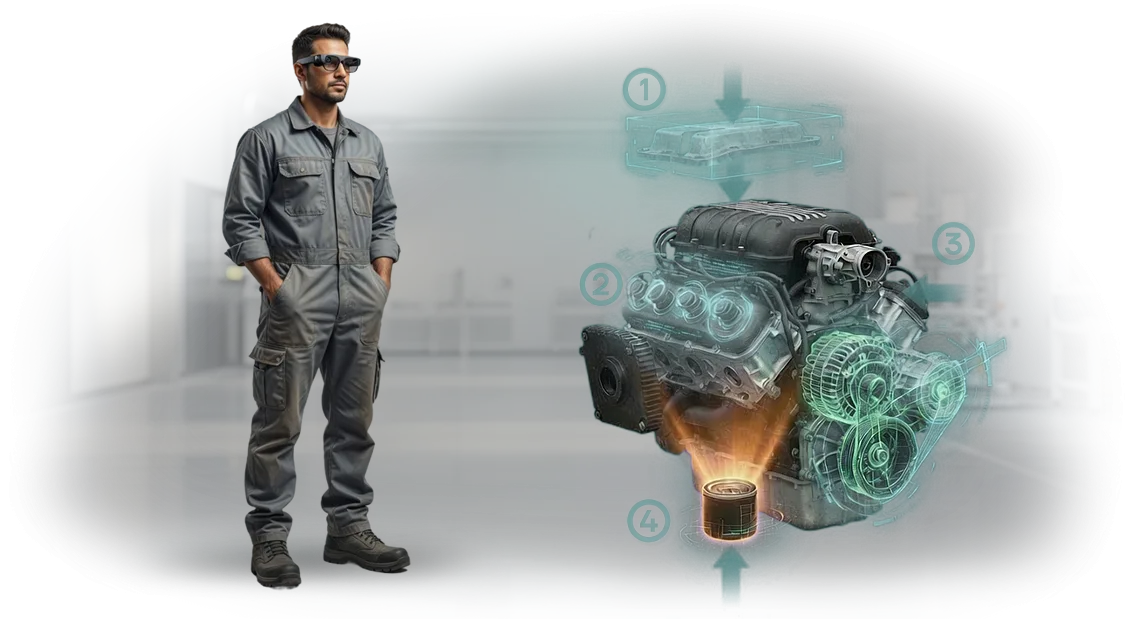
פיתוח הוראות AR לציוד כרייה
תחזוקת ציוד כרייה היא עבודה שבה כל טעות עלולה להוביל לשעות של השבתה ולהפסדים כבדים.
הוראות הנייר שעליהן מפעלים רבים עדיין מסתמכים אינן עומדות בדרישות הייצור האמיתי: הן מתיישנות, מתלכלכות, אובדות, והכי חשוב – הן לא מראות בדיוק כיצד לפעול על מכונה ספציפית.
מכונאי מבזבז זמן בחיפוש אחר הסעיף הנכון, מנסה להתאים שרטוטים לרכיבים בפועל, ולעתים קרובות מקבל החלטה באקראי. זו דרך ישירה לרצפי פעולה שגויים, תקלות והשבתות לא מתוכננות.
כל שעת השבתה בתעשיית הכרייה היא תפוקה אבודה ולוח זמנים משובש. כשהציוד עומד, כל השרשרת סובלת: מהפקה ועד שילוח.
במקביל, חלק ניכר מההשבתות נגרם לא מבלאי ציוד, אלא מטעויות של כוח אדם במהלך תחזוקה ותיקון.
אפילו עובדים מנוסים עושים טעויות כשהנוהל אינו תואם את מצב המכונה בפועל או דורש פעולה במצב לא סטנדרטי.
הוראות AR פותרות את הבעיה הזו מהשורש. במקום מדריכי נייר וקבצים מפוזרים, המומחה מקבל הנחיות שלב-אחר-שלב שמוצגות ישירות על הציוד.
המערכת מדגישה את הרכיב הנדרש, מראה את רצף הפעולות הנכון, בודקת כל שלב ומתריעה על סיכונים אפשריים. זה מבטל את העמימות והופך את תהליך התחזוקה למובן אפילו למתחיל.
התוצאה היא הפחתת השבתות, פחות טעויות והכשרת עובדים מהירה יותר. העובד לא דפדף במדריך הוראות, אלא מבצע את המשימה תחת שליטתו של עוזר דיגיטלי, מה שמשפר את איכות התחזוקה והבטיחות.
הציוד חוזר לפעולה מהר יותר, ומהנדסים מבזבזים פחות זמן בתיקון טעויות של אחרים.
אנו מפתחים הוראות AR לציוד כרייה המותאמות למאפייני הייצור שלך. אנו מעבירים את הנהלים והניסיון של המומחים שלך לתרחישי מציאות רבודה נוחים שעובדים בתנאים הקשים ביותר.
זו לא רק החלפה של נייר – זה סטנדרט תחזוקה חדש שמשתלם דרך פעילות יציבה של הציוד ולוחות זמנים צפויים.
כיצד הוראות AR מפחיתות השבתות לציוד כרייה
כל שעת השבתה של ציוד כרייה גורמת לא רק לתוכנית שלא מומשה, אלא גם לכשל של כל שרשרת הייצור: מקדחים, מתקני ריסוק, מסועים.
צוותי תיקון מבזבזים זמן בחיפוש אחר תיעוד, עובדים מנוסים מוסחים על ידי ייעוץ, ומתחילים פועלים באקראי.
הוראות AR מעבירות ידע ישירות על הציוד: המומחה רואה בדיוק מה צריך לעשות, באיזה רצף ועם איזה כלי.
היתרון הראשון והעיקרי הוא מהירות התיקון. במקום לדפדף במדריכי נייר או לחפש את השרטוט הנכון במאגר, העובד מקבל הנחיה שלב-אחר-שלב על מסך טאבלט או משקפי מציאות רבודה.
הם מוצאים מיד את הרכיב הנדרש, רואים את סדר הפעולות ומקבלים אזהרות על טעויות אופייניות. התקלה מסולקת מהר יותר באופן ניכר, וההשבתה מצטמצמת משעות לדקות.
היתרון השני הוא דיוק תפעולי. הוראת ה-AR מדגישה בדיוק את האלמנט שצריך לעבוד איתו, כך שמחברים שהתחלפו, רצפי הידוק שגויים או נזק לחלקים סמוכים – מתבטלים.
זה חשוב במיוחד במערכות הידראוליות וחשמליות מורכבות, שבהן מחיר הטעות הוא פירוק חוזר והשבתה נוספת.
בנוסף, הוראות כאלה פותרות את בעיית ההכשרה: עובד חדש מבצע פעולות תחת שליטתה של הנחיה חכמה, בלי להסיח את דעתם של טכנאי תיקון מנוסים ובלי לחכות שמורה יהיה פנוי.
היתרון השלישי הוא בטיחות העובדים. ההוראה כוללת שלבי חובה לניתוק חשמל, נעילה ובדיקה, וכן אזהרות סיכון. זה מפחית את הסבירות לפציעות ותאונות, שכשלעצמן עוצרות את העבודה לזמן רב.
בסופו של דבר, הוראות AR פועלות על שלושה מדדי מפתח בבת אחת: פחות זמן בתיקונים, פחות טעויות, פחות סיכונים. לכן אנחנו בצוות שלנו משתמשים במציאות רבודה לא כהדגמה מרשימה, אלא ככלי עבודה שמחזיר את עצמו בשיקום הציוד הגדול הראשון.
פורמטים של הוראות AR למשימות עסקיות שונות
כל משימה דורשת פורמט הוראת AR משלה: מה שמתאים להכשרת מתחיל יתברר כאיטי מדי עבור מכונאי מנוסה במהלך בדיקה מתוכננת.
במקום פתרון אוניברסלי, אנו מציעים שלושה פורמטים סטנדרטיים לתרחישים עסקיים שונים – מהכשרת מבוא ועד תיקון חירום.
| פורמט | למי | מה זה נותן ללקוח |
|---|---|---|
| קורס הכשרה | עובדים חדשים, חניכים, מפעילים ללא ניסיון | זמן מופחת עד לפרודוקטיביות מלאה, רמות מיומנות עקביות בכל הצוות |
| הוראת תחזוקה שוטפת | צוותי שירות, מחלקות תיקונים | פחות טעויות בעבודה שגרתית, עמידה בלוח זמנים, הפחתת השבתות |
| תמיכה מרחוק | מהנדסים בשטח + מומחים במשרד הראשי | פתרון מהיר של מצבים לא סטנדרטיים ללא נסיעות עסקים או המתנה למומחה |
הפורמט הראשון הוא להכשרה. מתחיל רואה תרחיש שלב-אחר-שלב על המסך עם הנחיות ישירות על הציוד; אין צורך לקרוא שוב נהלי נייר.
זה מפחית את מספר הטעויות בהתחלה ומקצר את הזמן שלוקח לעובד להתחיל לעבוד באופן עצמאי.
השני הוא לתחזוקה שוטפת. מכונאי מקבל רשימת בדיקה ממש בשדה הראייה שלו: הוא לא יפספס רכיב, לא ישכח פעולה וירשום מיד את התוצאה.
המפקח רואה שהנוהל הושלם במלואו – פחות סיכונים להשבתות לא מתוכננות עקב גורם אנושי.
השלישי הוא לתמיכה מרחוק. כשהצוות המקומי לא יכול להתמודד עם מצב, מומחה מהמשרד מתחבר ומדריך אותם שלב אחר שלב דרך ממשק ה-AR.
אין צורך לחכות שמומחה ייסע – התקלה נפתרת ביום שבו דווחה, וזה אומר שעות שבהן הציוד ממשיך לפעול.
כיצד אנו יוצרים הוראות AR: שלבי העבודה
חידדנו את התהליך עד לפרט הקטן ביותר כדי שתמיד תבינו באיזה שלב נמצא הפרויקט ומה תקבלו בסופו. אנו עובדים בשלבים: מהבריף ועד ההשקה ותמיכה נוספת – ללא עבודה נסתרת או תיקונים בלתי צפויים.
-
בריף וסקר. אנו צוללים לתוך המשימה שלך: אילו פעולות ציוד כרייה צריך להסביר, מי ישתמש בהוראה ובאילו תנאים. אנו מבקרים באתר או אוספים נתונים מרחוק כדי לתפוס תרחישי עבודה אמיתיים.
-
אישור תרחיש. בהתבסס על הבריף, אנו מכינים תרחיש שלב-אחר-שלב להוראה העתידית: אילו רכיבים ומנגנונים ה-AR מציג, אילו פעולות העובד מבצע.
אתם רואים את ההיגיון ומאשרים אותו לפני תחילת הפיתוח – זה מבטל עבודה חוזרת בשלב הסופי.
-
פיתוח תוכן. אנו יוצרים מודלי תלת-ממד, אנימציות והנחיות טקסט המשכפלים במדויק את הציוד שלך. כל התוכן מותאם לטאבלטים ולסמארטפונים שכבר יש לעובדים – אין צורך לרכוש דבר נוסף.
-
הרכבת הוראת AR. אנו בונים אפליקציה עם ממשק ברור על פלטפורמה מקצועית. ההוראה עובדת ללא אינטרנט בשטח, וזה קריטי למפעלי כרייה – הקישוריות במחצבות ובסדנאות עלולה להיות לא יציבה.
-
בדיקות בשטח. אנו בודקים את ההוראה על ציוד אמיתי עם המומחים שלך. בשלב זה אנו מבצעים התאמות: מכווננים הנחיות, מבהירים את רצף הפעולות, כך שהגרסה הסופית תהיה נוחה לשימוש.
-
השקה והכשרה. אנו מספקים את ההוראה המוגמרת, מתקינים אותה על מכשירים ומבצעים הכשרת עובדים קצרה. אתם מקבלים כלי שמוכן לשימוש מיידי – אין צורך להבין פרטים טכניים.
-
תמיכה. אנו נשארים בקשר לאחר ההשקה: אנו מעדכנים תוכן אם הציוד או הנהלים משתנים, ועונים על שאלות עובדים. זה מפחית את העומס על המהנדסים שלך.
רצף זה מבטל הפתעות: אתם רואים את הפורמט, לוח הזמנים והשלבים מראש, ובסוף מקבלים כלי עבודה שמקצר את זמן ההכשרה ומפחית את הסיכון לטעויות במהלך התחזוקה.
מה כלול במסירת הוראת AR
כשאתם מזמינים הוראת AR, חשוב להבין שאתם לא מקבלים "קובץ" או הקלטה חד-פעמית.
אנו מספקים חבילת עבודה מלאה שמשתלבת מיד בתהליכי התחזוקה של ציוד כרייה: מאפליקציה ניידת ועד תוכן והכשרה למומחים שלך.
המסירה כוללת:
- אפליקציה ניידת לטאבלטים וסמארטפונים שעובדת גם ללא חיבור יציב – זה קריטי למחצבות ואתרים מרוחקים. עובד פותח את ההוראה ישירות ליד הציוד במקום לחזור לסדנה בשביל נוהל נייר.
- הוראת AR מוכנה למכונה ספציפית: תרחישים שלב-אחר-שלב לעבודה שגרתית, אבחון ותיקונים עם הנחיות שמוצגות על האובייקט האמיתי.
- לוח ניהול לעדכוני תוכן עצמאיים. אתם יכולים לשנות נהלים, להוסיף פעולות או רכיבים חדשים – ללא מעורבות מפתחים או אישורים מיותרים.
- חבילת הכשרה לצוות שלך: הוראות, סרטונים קצרים ורשימות בדיקה למפעילים ומפקחים. אנו עוזרים לכם ליישם את הכלי כך שישמש מהיום הראשון.
- תמיכה טכנית לכל תקופת השימוש. אנו עוזרים להתאים תוכן כשהנהלים משתנים, הציוד עובר מודרניזציה או מופיעים דגמים חדשים.
- אופציונלית – חבילה מורחבת: הוראות צילום ווידאו, קריינות, אינטגרציה עם מערכת הזמנות העבודה שלך, כך שנתוני העבודה שהושלמו נכנסים למאגר המשותף.
כל אלמנט בחבילה נותן מענה למשימה ספציפית: האפליקציה מבטיחה נגישות, התוכן מבטיח דיוק בפעולות, לוח הניהול מבטיח עדכניות, וההכשרה מבטיחה מהירות אימוץ.
אז אתם מקבלים לא "הוראה", אלא כלי ניתן לניהול שמפחית השבתות ומנמיך את הסיכון לטעויות בתחזוקת ציוד כרייה.
מקרה בוחן: כיצד הפחתנו את זמן התיקון ב-30%
במפעל כרייה, כל עצירת ציוד משמעותה טונות אבודות של עפרה ולוחות חוזה לחוצים. תיקון מכונות מורכבות נמשך לעתים קרובות זמן רב: מומחים נאלצו לדפדף במדריכי נייר, למצוא את הרכיב הנכון ולהיזכר ברצף הפעולות. כתוצאה מכך, ההשבתות נמשכו זמן רב מדי, וטעויות הרכבה הובילו לתקלות חוזרות.
המשימה והפתרון
הלקוח ביקש מאיתנו להפוך את תהליך התחזוקה לברור ומהיר.
אנחנו, הצוות שלנו, פיתחנו הוראות AR לצוות התיקון: מומחה מכוון טאבלט לרכיב ציוד ורואה הנחיה שלב-אחר-שלב ישירות על החלק – מה להבריג, איזה כלי לקחת, איפה ללחוץ. ללא תנועות מיותרות או ניחושים.
היישום בוצע מרחוק: המומחים שלנו הכינו את ההוראות, ושירות התפעול של המפעל הכניס אותן לשימוש. תוך שבוע אחד בלבד, הצוות שלט במערכת החדשה, והתמיכה הטכנית ליוותה את התיקונים הראשונים באינטרנט.
התוצאה
המדד המרכזי – זמן התיקון – ירד ב-30%. אם החלפת רכיב מורכב ארכה בעבר מספר שעות, הצוות טיפל בזה עכשיו מהר יותר באופן ניכר, ומספר טעויות ההרכבה ירד בכמעט חצי. השבתות הציוד התקצרו, כלומר המפעל עמד בתוכנית שלו ללא כיבוי שריפות.
הלקוח ציין בנפרד את הכשרת העובדים החדשים: בעבר הם היו עוקבים אחרי חונך במשך שבועות, עכשיו מספיקים תיקון או שניים עם הנחיות AR. זה הפחית את העומס על המומחים המנוסים והאיץ את הקליטה.
אחרי חודשי השימוש הראשונים, המפעל הזמין הרחבה של ספריית הוראות ה-AR לסוגי ציוד אחרים – מה שמראה שהפתרון החזיר את עצמו. אנו ממשיכים לתמוך בפרויקט ולפתח את המערכת למשימות חדשות.
כיצד לדעת אם הוראות AR מתאימות לציוד שלך
הוראות AR אינן מתאימות לכל ציוד ללא הבחנה – יש קריטריונים מעשיים שבעזרתם קל לבדוק אם הן יועילו לצי הספציפי שלך. אם לפחות שניים מתוך שלושת התנאים תואמים למצבך, כדאי להתייחס לפורמט ברצינות.
הקריטריון הראשון הוא מורכבות הציוד. ככל שיש יותר רכיבים, פעולות לא סטנדרטיות וטעויות קריטיות בתחזוקה, כך עלות הגורם האנושי גבוהה יותר.
בציוד כזה, אפילו מכונאי מנוסה עלול לבלבל את רצף השלבים, ומתחיל צריך לדפדף בנהלי נייר – מבזבז זמן ומסתכן בטעות יקרה.
הוראת AR מדריכה את המומחה שלב אחר שלב, ומראה ישירות על החלקים מה לעשות ואיך – זה מפחית דרמטית את הסיכון ומאיץ את העבודה.
הקריטריון השני הוא תדירות התחזוקה והתדירות שבה הנהלים מתעדכנים. אם אתם מבצעים תחזוקה שוטפת, מחליפים חומרים מתכלים לפי לוח זמנים ומעדכנים נהלים לעתים קרובות, הוראות רגילות מתיישנות מהר יותר ממה שמספיקים להדפיס אותן מחדש.
AR מאפשרת לעדכן מדריכים דיגיטליים באופן מרכזי – מומחים רואים תמיד את הגרסה העדכנית, ואתם חוסכים בהדפסות ובהכשרות חוזרות. זה חשוב במיוחד כשצוותים שונים ניגשים לציוד או כשיש תחלופת עובדים.
הקריטריון השלישי הוא ריחוק האתר. אם המתקנים שלך מפוזרים גיאוגרפית והבאת מהנדס או מומחה אורכת שעות או ימים, הוראות AR עם תמיכה מרחוק הופכות לא רק לנוחות, אלא לכלי להפחתת השבתות.
המומחה בשטח מרכיב משקפיים או פותח טאבלט, מקבל הדרכה שלב-אחר-שלב, ובמקרים מורכבים מחבר מומחה מרחוק שרואה בדיוק מה שהמכונאי רואה ומספק ייעוץ בזמן אמת.
הדבר המרכזי להבין הוא שהוראות AR לא מחליפות הכשרה – הן הופכות ידע לזמין ברגע שבו הוא נחוץ.
אם הציוד שלך באמת מורכב, דורש תחזוקה תכופה או רחוק מכוח אדם מוסמך, תקבלו ערך עוד לפני שהפרויקט מתחיל.
אנו עוזרים להעריך ציוד לפי קריטריונים אלה, לבחור תרחישים מתאימים וליישם AR כך שהתוצאה תיראה בכסף ובזמן, לא בהדגמה מרשימה.
שאלות נפוצות על פיתוח הוראות AR
כשמדובר בהוראות AR לציוד כרייה, השאלות הנפוצות ביותר נוגעות לאותם דברים: כמה מהר אפשר ליישם, האם זה ישתלב בתהליכים הנוכחיים, והאם אפשר לסמוך על הוראות כאלה בשטח.
אנו עונים על החששות המרכזיים – ללא פרטים טכניים, רק הנקודות המעשיות שמשפיעות על עבודת צוות התיקון.
כמה זמן לוקח לפתח הוראת AR?
זה תלוי במורכבות הרכיב ובמספר הפעולות. ליחידה טיפוסית – משבועיים עד חודש.
אין צורך לעצור את הייצור: אנו עובדים מרחוק, והצילום והעיגון לציוד האמיתי נעשים בחלונות מוסכמים כדי לא להפריע לתיקונים מתוכננים.
עם איזה ציוד הוראות AR עובדות? האם הן יתאימו למכונות שלנו?
ההוראות מוצגות על טאבלטים וסמארטפונים שכבר יש לצוות התיקון – אין צורך לרכוש מכשירים מיוחדים. אנחנו לא קשורים למותג או לדגם: שכבת ה-AR מוצגת על כל יחידה, ממחפרון ועד מגרסה. החומר המוגמר ניתן להעברה למערכת הזמנות העבודה שלך או לשימוש עצמאי.
מה קורה אם הציוד משתנה או שהנוהל מתיישן?
אנו בונים את ההוראה עם נקודות בקרה: המפקח רואה בדיוק איזה רכיב מפורק כרגע ובודק פעולות מול התרשים העדכני. אם אתם מבצעים שינוי עיצובי, אנו מעדכנים את ההוראה, והתיקון הבא כבר מתבצע לפי הגרסה החדשה.
AR מדגישה בנוסף פעולות קריטיות, ומפחיתה את הסיכון לפספס שלב חשוב במהלך התחזוקה.
אם השאלה שלך לא הייתה ברשימה – ספרו לנו על המשימה שלכם, ונראה כיצד הוראת AR תשתלב בתהליך התיקון שלכם ואילו תוצאות תוכלו להשיג על רכיב ספציפי.חישוב עלות הוראות AR לציוד שלך
הערכת תקציב להוראות AR לציוד כרייה אינה קלה: יש יותר מדי משתנים – מספר רכיבים, מורכבות פעולות, פורמט הצגה. אבל בלי נתון ראשוני, אי אפשר לתכנן את הפרויקט ולהצדיק אותו להנהלה.
הסרנו את אי-הוודאות: שלחו פנייה – וקבלו חישוב מדויק לצי הציוד שלכם, לא מחיר ממוצע מהאינטרנט.
מה כלול בחישוב:
- העלות המדויקת של הפיתוח עבור הציוד והפעולות האופייניות שלך – ללא תוספות נסתרות לתיקונים.
- פירוט לפי שלבים: מה כולל כל שלב ומתי התשלום.
- מספר אפשרויות יישום – ממערך מינימלי ועד קו ייצור מלא עם מציאות רבודה.
- לוחות זמנים ראשוניים להשקה בהתבסס על לוח התחזוקה וההשבתות שלך.
- דוגמאות להוראות AR מוגמרות לציוד כרייה דומה – תראו את הפורמט לפני שמתחילים.
- המלצות על פורמט: טאבלטים, סמארטפונים או משקפי מציאות רבודה – מה ישתלם מהר יותר בתנאים שלכם.
לאחר הפנייה שלך, אנו מבהירים את הפרטים בטלפון תוך יום עסקים אחד ושולחים את החישוב למייל שלך. אין צורך להבין בניואנסים טכניים – אנו נשאל את השאלות הנכונות בעצמנו.
אתם מקבלים נקודת ייחוס תקציבית והבנה כיצד לשלב AR בתהליך התחזוקה הקיים שלכם.
השאירו פנייה – ועד מחר תדעו כמה עולה הפרויקט ומתי תוכלו להפחית השבתות ציוד. ואם אתם צריכים הערכה מדויקת יותר לאזור פיילוט, נשלח תוכנית יישום לשבועות הקרובים יחד עם החישוב.