

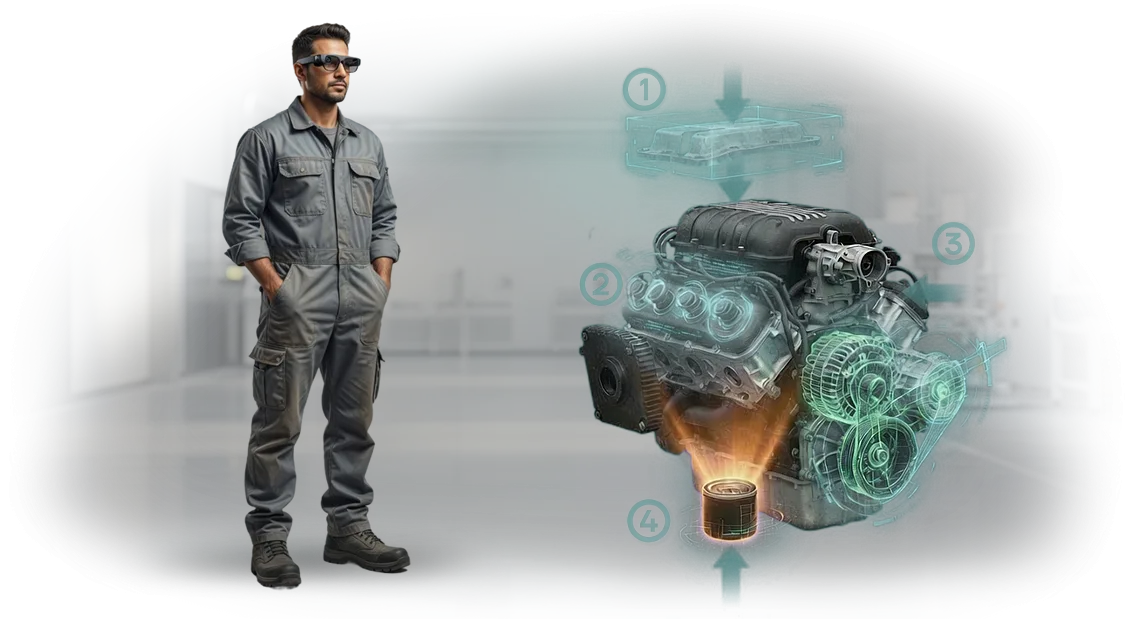
הוראות AR לשיט: כיצד להאיץ תיקונים ולהפחית סיכונים
כאשר כלי שיט עוגן עקב תקלה, כל שעת השבתה הופכת להפסדים: הפלגות מופרעות, קבלנים נפגעים, והעלויות לגרירה והשכרה ממשיכות לעלות.
בינתיים, תיקון ציוד ימי כמעט תמיד דורש כישורים נדירים — מכונאים על הסיפון לא תמיד מכירים את הפרטים של דגם מסוים, וקריאה למומחה לעלות על הסיפון אורכת ימים.
כתוצאה מכך, הצוות פועל על פי ניחושים, תוך סיכון לטעות שהופכת תקלה קלה לשיפוץ יקר ומקיף.
שגיאות תחזוקה הן האיום הסמוי השני. סדר פירוק שגוי, מחברים שנשכחו, מומנט הידוק לא נכון — כל אלה מקצרים את חיי הציוד ומגבירים את הסיכון לתאונה.
בים, ההשלכות חמורות יותר מאשר ביבשה: אין מי שיעזור במהירות, ובטיחות הצוות תלויה ישירות בתפקוד התקין של המערכות.
זו הסיבה שבעלי אוניות מחפשים יותר ויותר דרך להעביר את הידע של מהנדסים מנוסים ישירות לסיפון, מבלי לחכות לנוכחותם הפיזית.
הוראות AR פותרות בעיה זו: מומחה, טכנאי תיקונים או איש צוות רואה הנחיות שלב-אחר-שלב ישירות על הציוד באמצעות טאבלט או משקפי מציאות רבודה.
חיצים מראים מה להבריג, הדגשה מסמנת את הרכיבים הנדרשים, והמערכת מזהירה על פעולות קריטיות. זה הופך תיקון ציוד ימי מורכב לתהליך ברור שמבוצע בניסיון הראשון, גם אם האדם רואה את המנגנון בפעם הראשונה.
עבור בעל עסק, זה אומר יכולת חיזוי: זמן ההשבתה מצטמצם פי כמה, כי הצוות לא מחכה למומחה אלא פועל מיד לפי ההוראות.
הסיכון לטעויות פוחת — כל שלב נבדק על ידי המערכת, ופעולות מסוכנות נחסמות עד לאישור. בטיחות הצוות מתחזקת: הנחיות AR מזכירות על ציוד מגן ומתריעות על אזורים בסיכון גבוה.
אנחנו כבר מיישמים פתרונות כאלה עבור חברות שיט ולקוחות תעשייתיים: אנו מפתחים הוראות AR שעובדות ללא אינטרנט יציב על הסיפון, מתאימות לדגם ציוד ספציפי, ומתעדכנות בקלות כאשר התקנות משתנות.
התוצאה — פחות השבתות, עלויות תיקון נמוכות יותר, אמון גבוה יותר של הצוות בתהליך. אם תרצו להעריך כיצד זה ישפיע על ההוצאות התפעוליות שלכם, נתחיל באזור פיילוט על סוג ציוד אחד.
מה הטמעת הוראות AR נותנת לעסקי השיט
הטמעת הוראות AR לעסקי השיט אינה רק החלפת תקנות נייר. זהו שינוי מערכתי בתהליכי התחזוקה והתיקון שמשפיע ישירות על כלכלת ההפלגה ובטיחות הצוות.
להלן היתרונות המרכזיים שבעל האונייה מקבל:
- זמן תיקון מופחת. המכונאי רואה הוראות שלב-אחר-שלב ישירות על הציוד ואינו מבזבז זמן בחיפוש העמוד הנכון בתיעוד. כתוצאה מכך, זמן פתרון תקלות ממוצע יורד ב-30-40%.
- פחות טעויות כוח אדם. הנחיות AR מבטלות רצפי פעולה שגויים. זה חשוב במיוחד בעבודה עם רכיבים מורכבים שבהם טעות עולה ביוקר.
- חיסכון בהכשרה. איש צוות חדש מתעדכן מהר יותר: במקום שבועות של לימוד מדריכים — כמה ימי תרגול עם מאמן AR. בעל האונייה מוציא פחות על קליטה והכשרה מתקדמת.
- בטיחות משופרת. פעולות ימיות כרוכות בסיכון. הוראות AR מתריעות על אזורים מסוכנים ומזכירות על נהלי בטיחות בזמן אמת.
מומחים בצוות שלנו מציינים: חברות שיט שמיישמות הוראות AR לא רק מחזירות כלי שיט לשירות מהר יותר, אלא גם מקבלות סטטיסטיקה שקופה לכל פעולה — מה שמאפשר תכנון מדויק יותר של תיקונים ורכש חלקי חילוף. כתוצאה מכך, הפרויקט מחזיר את עצמו לאחר חודשי הפעילות הראשונים.
פורמטים של הוראות AR לשיט
פורמט הוראות ה-AR קובע באיזו מהירות הצוות או מומחה מהחוף יכולים לטפל במשימה על הסיפון. הנחיות שלב-אחר-שלב, דיאגרמות אינטראקטיביות ומצב עוזר מרחוק מכסים תרחישים שונים — מתחזוקה שוטפת ועד תיקוני חירום במהלך הפלגה.
להלן השוואת פורמטים כדי שתוכלו לבחור את המתאים לסוג כלי השיט ולרמת המיומנות של הצוות.
| פורמט | למי | מה זה נותן ללקוח |
|---|---|---|
| הוראות AR שלב-אחר-שלב | צוות, מכונאים ימיים | פחות טעויות בעבודה שגרתית, הכשרה מהירה של עובדים חדשים |
| דיאגרמות אינטראקטיביות | מתכננים, צוותי תיקון | הדמיה ברורה של רכיבים ומערכות, שליטה על רצף הפעולות |
| עוזר AR מרחוק | מהנדסי חוף, שירותי חירום | חיסכון בשליחת מומחים, פתרון בעיות תוך דקות, תיעוד פעולות |
בשילוב פורמטים, אתם מקבלים מערכת תמיכה אחידה לכל הצי. לדוגמה, הוראה שלב-אחר-שלב לתחזוקה שוטפת מתווספת עם עוזר מרחוק למצבי חירום.
מציאות רבודה לכלי שיט פועלת גם בתנאי קישוריות מוגבלים, וכל הפעולות מתועדות לבדיקה ושיפור תהליכים.
אנחנו בוחרים את הפורמט למשימות שלכם — מסירות קטנות ועד כלי שיט בעלי טונה גדולה, מבדיקות יומיות ועד תיקונים מורכבים. בקשו ייעוץ — נראה כיצד הוראות AR יפחיתו השבתות וישפרו את הבטיחות בכלי השיט שלכם.
כיצד פועל פיתוח הוראות AR: שלבים ולוחות זמנים
אנחנו עובדים לפי תכנית שקופה: אתם תמיד יודעים באיזה שלב נמצא הפרויקט, מה כבר נעשה ומה הלאה. אנחנו מתחילים בבריף, מתעדים את הדרישות, ואז יוצרים הוראות AR, בודקים אותן על ציוד אמיתי, ומוסרים אותן לתפעול. כל שלב מסוכם איתכם, כך שהתוצאה הסופית עומדת בציפיות.
-
בריף — אנו דנים במשימות, סוג הציוד ותרחישי השימוש בהוראות. אנו מזהים קבוצות עובדים יעד, קריטריוני הצלחה ולוחות זמנים. אנו מגדירים כיצד תעריכו את התוצאה.
-
ניתוח ותכנית — אנו לומדים את התיעוד, התקנות ומאפייני התפעול. אנו מכינים תכנית עבודה מפורטת: הרכב ההוראות, מבנה, פורמט הצגה ושלבי אישור. אתם מקבלים מפת דרכים ברורה לפרויקט.
-
אישור תרחישים — אנו יוצרים תיאורי טקסט לכל פעולה: שלבים, רצף פעולות, נקודות בקרה. אתם מוודאים את הדיוק ומאשרים את התרחישים לפני תחילת הפיתוח — זה מבטל עבודה חוזרת בשלבים מאוחרים יותר.
-
פיתוח תוכן AR — אנו בונים מודלים תלת-ממדיים אינטראקטיביים, אנימציות והנחיות שמוצגות על הציוד האמיתי. מומחים מוודאים דיוק ושימושיות במתקנים שלכם או על ספסל הבדיקה שלנו.
-
בדיקה על ציוד — אנו עורכים שימוש פיילוט על כלי שיט אמיתיים או קווי ייצור. אנו אוספים משוב מטכנאים ומהנדסים ומבצעים התאמות. אתם רואים כיצד ההוראות עובדות בתנאים אמיתיים.
-
השקה והכשרה — אנו משלבים את ההוראות בתהליך העבודה: מחברים אותן לטאבלטים ולסמארטפונים של העובדים, מגדירים גישה. אנו מאמנים צוות ומנהלים ומספקים מדריך משתמש ברור.
-
תמיכה ועדכונים — לאחר ההשקה, אנו נשארים בקשר: אנו מעדכנים תוכן כאשר הציוד משתנה, מוסיפים הוראות חדשות ומגיבים במהירות לשאלות. אתם מקבלים כלי עבודה שמתפתח יחד עם צי הציוד שלכם.
מה כלול במסירת הוראות AR לצי שלכם
כאשר אתם מזמינים הוראות AR לצי שלכם, חשוב להבין: אתם מקבלים לא רק אוסף קבצים, אלא חבילת עבודה שמשתלבת מיד בתהליכי חברת השיט.
אנחנו מרכיבים את המסירה כך שהצוות יוכל להשתמש בהוראות מהיום הראשון — ללא הגדרות ארוכות ופתרון תקלות.
החבילה הבסיסית כוללת:
- הוראות AR מוכנות לפעולות טיפוסיות — תחזוקת מנוע, בדיקות מערכות, נהלי חירום. כל אחת מותאמת לכלי שיט ספציפי ולציוד שלו, לא לדוגמה מופשטת.
- יישום נייד לטאבלטים וסמארטפונים — עובד במצב לא מקוון, ללא חיבור אינטרנט קבוע, וזה קריטי במהלך הפלגה. המכונאי רואה הנחיות שלב-אחר-שלב ישירות על המסך מעל האובייקט האמיתי.
- אינטגרציה עם התיעוד התפעולי שלכם — כל ההוראות מקושרות לתקנות, יומנים ורשימות בדיקה, כך שאינכם צריכים לשמור את אותו מידע בראש ועל נייר.
- קבצי מקור וזכויות לשינויים — אתם יכולים לבצע שינויים במהלך מודרניזציה של הצי או עדכוני תקנים פנימיים מבלי להזמין עבודה מאפס בכל פעם.
- עדכוני הוראות — כאשר הציוד או הנהלים משתנים, אנו מעדכנים במהירות את התוכן כך שהצוות תמיד עובד עם נתונים עדכניים ואינו פועל לפי תכניות מיושנות.
- הכשרת מפעילים — אנו עורכים הדרכות למכונאים, קברניטים וצוות טכני. אנשים לומדים להשתמש בהנחיות AR בפועל במקום לקרוא מדריך תוכנה.
חשוב לציין, כל החבילה מלווה בתמיכה טכנית במהלך שלב ההטמעה. אנחנו לא נעלמים לאחר מסירת החומרים — אנו עוזרים להתאים את ההוראות למאפייני הצי שלכם, עונים על שאלות ומתקנים פרטים בעת הצורך.
בסופו של דבר, אתם מקבלים לא מסמכים מפוזרים אלא מערכת הכשרה ובקרה אחידה. צוות האונייה שולט בתקנות מהר יותר, מספר טעויות התחזוקה יורד, וכל התיעוד הרלוונטי תמיד בהישג יד — בצורה דיגיטלית. זהו הערך המעשי של הוראות AR, שתוכלו להעריך בהפלגה הראשונה שלכם.
מקרה בוחן: הוראות AR לציוד ימי — תוצאות
עבור חברת שיט עם צי של תריסר כלי שיט, כל עצירה לא מתוכננת משמעותה שיבוש לוח זמנים, השבתת צוות והפסדים ישירים.
יישמנו הוראות AR לציוד ימי על אחת מאוניות המטען היבש שלהם כדי לבדוק כיצד הטכנולוגיה תשפיע על מהירות התיקון ואיכות עבודת המכונאים.
התוצאות עלו על הציפיות: זמן תיקון טיפוסי של ציוד שאיבה ירד פי 2.5 — משעתיים ל-45 דקות. שגיאות הרכבה של רכיבים ירדו ב-40%, ואיש צוות חדש החל עבודה עצמאית ביום השלישי במקום השבועיים הרגילים.
המדד המרכזי לעסק הוא הפחתת השבתות. אם בעבר תקלה במהלך הפלגה משמעותה המתנה למהנדס שירות או תקשורת יקרה עם המטה, עכשיו המכונאי פתר את המשימה במקום.
הקברניט קיבל כלי שעובד גם בתנאי קישוריות מוגבלים: תרחישי מפתח נטענים מראש למערכת וזמינים במצב לא מקוון.
הם ציינו בנפרד את ההפחתה בעומס על התמיכה הטכנית: מספר הפניות מהצוות למשרד החוף ירד בשליש, כי תשובות לשאלות טיפוסיות מובנות בהוראות. זה שחרר את מומחי המטה למשימות מורכבות באמת.
לאחר הפיילוט, החברה הרחיבה את הפתרון לשלושה כלי שיט נוספים — עכשיו הם משתמשים בהוראות AR לתחזוקת מנוע, הידראוליקה ואלקטרוניקה.
הזמנה חוזרת והרחבת הפרויקט היא המדד הטוב ביותר לכך שהטכנולוגיה מחזירה את עצמה לא דרך חדשנות מופשטת אלא דרך שעות קונקרטיות שנחסכו להפלגה.
כיצד לבחור את פורמט הוראות ה-AR למשימות הצי שלכם?
אין פורמט אוניברסלי להוראות AR — הבחירה תלויה בסוג כלי השיט, גודל הצוות ומורכבות הפעולות.
כדי להימנע מתשלום יתר על המיותר ומקבלת פתרון פשוט מדי, העריכו שלושה פרמטרים: משימות טיפוסיות, הכשרת כוח אדם ותנאי עבודה על הסיפון.
לבדיקה שגרתית ופעולות התנעה, הנחיה קומפקטית מספיקה. לתחזוקה שוטפת או עבודה במשמרות מרובות, נדרשת הוראה שלב-אחר-שלב עם בקרה. למצבי חירום נדירים — עוזר אינטראקטיבי מרחוק עם גישה למומחה מהחוף.
השוו את הפורמטים מול משימות הצי שלכם:
| פורמט | לאילו כלי שיט | מתי לבחור | מה זה נותן ללקוח |
|---|---|---|---|
| הנחיית AR קומפקטית | סירות, כלי שיט קטנים | בדיקה, התנעה, עצירת חירום | הכנה מהירה יותר, פחות טעויות |
| הוראה שלב-אחר-שלב | מעבורות, גוררות, טונה בינונית | תחזוקה שוטפת, תקנות, הכשרה | תקן אחיד, בקרה |
| עוזר מרחוק | כלי שיט בעלי טונה גדולה | מצבי חירום, פעולות נדירות | פתרונות מהירים, פחות השבתות |
מאפייני כלי השיט משפיעים על התאמת ההוראות: נדנוד, סנוור, לחות, קישוריות לא יציבה. אנו יוצרים אלמנטים גדולים בממשק, זיהוי ציוד יציב תחת רטט, ומסד נתונים לא מקוון לעבודה ללא אינטרנט.
לכן, אותה פעולה על סירה ואוניית מטען יבש תיראה שונה — זו דרישת בטיחות.
אם אתם מתלבטים, שלחו את התקנות הסטנדרטיות שלכם — נציע 2-3 אפשרויות פורמט עם דוגמה מותאמת לציוד שלכם. זה ייקח 3-5 ימי עסקים, ותקבלו החלטה על בסיס אב טיפוס חזותי.
שאלות נפוצות על הטמעת הוראות AR ואחריות
הטמעת הוראות AR מעלה שאלות לגיטימיות: האם הפרויקט יחרוג מלוח הזמנים, האם הפתרון ישתלב בתהליכים הנוכחיים, ומי אחראי לתוצאה.
להלן תשובות לחששות הנפוצים ביותר, המבוססות על הניסיון האמיתי של הצוות שלנו בתעשייה ובשיט.
כמה עולה פיתוח הוראות AR?
העלות תלויה במספר הרכיבים, מורכבות הציוד ועומק פיתוח התרחישים. לשיט, אלה עשויות להיות הוראות לתחזוקת מנוע, מערכות ניווט או נהלי חירום.
אנחנו מחשבים את הפרויקט באופן אישי לאחר בריף קצר, אבל משהו אחר חשוב יותר: הוראת AR מחזירה את עצמה על ידי הפחתת השבתות וטעויות כוח אדם — בדרך כלל לאחר חודש הפעילות הראשון.
מהם לוחות הזמנים להטמעה?
פרויקט טיפוסי אורך מארבעה עד שמונה שבועות: מבדיקת ציוד ועד מסירת הוראות מוכנות. מערכות מורכבות עם רכיבים רבים — עד שלושה חודשים.
לוח הזמנים קבוע בחוזה, ואנחנו לא מזיזים מועדים: מסירה בשלבים מאפשרת לראות תוצאות ביניים ולבצע התאמות מבלי לבזבז זמן.
כיצד לשלב AR עם ציוד קיים?
אין צורך לפרק או להחליף דבר. אנחנו עובדים עם תיעוד עדכני, מודלי CAD וסריקה תלת-ממדית — אנו מקבלים עותק דיגיטלי של הרכיב הספציפי שלכם ולא תבנית מופשטת.
הוראות AR פועלות על טאבלטים, סמארטפונים או משקפי AR שמהנדסים ומכונאים כבר משתמשים בהם. לצי, זה נוח במיוחד: כל המידע זמין באזור התיקון, גם ללא אינטרנט יציב.
אילו אחריות ותמיכה טכנית ניתנות?
אנחנו מספקים אחריות רשמית על תפקוד ההוראות ועמידה בפונקציונליות המוצהרת. לאחר ההשקה, אנחנו נשארים בקשר: מעדכנים תוכן כאשר התקנות משתנות, משכללים תרחישים לציוד חדש ומכשירים צוות.
תמיכה טכנית כלולה בחוזה לכל תקופת התפעול — אתם לא נשארים לבד עם המוצר.
אם עדיין יש לכם שאלות — שלחו תיאור של המשימה שלכם, ונציע פתרון עם עלות שקופה המחושבת לאחר בדיקה ולוחות זמנים ברורים. הניסיון מפרויקטים עבור חברות שיט וציוד נמל מאשר: הוראות AR עובדות היכן שמהירות ודיוק פעולות הצוות חשובים ביותר.שלחו בקשה לפיתוח הוראות AR לצי שלכם
שלחו בקשה — ועד למחרת נקיים ייעוץ, נבחן את מאפייני הצי שלכם ונייעץ היכן הוראות AR יביאו תוצאות מהירות: יקצרו את זמן הכשרת הצוות, יפחיתו את מספר הטעויות במהלך תיקון ותפעול, ויסייעו לתקן את העבודה בכל כלי השיט.
אין התחייבויות או תשלומים מראש בשלב זה — אתם מקבלים מידע קונקרטי כדי לקבל החלטה מושכלת. הנה מה שהמגע הראשון כולל:
- ייעוץ ראשוני — אנו דנים במשימות שלכם, סוגי כלי השיט, התקנות ואזורי הבעיה בתהליכי ההכשרה הנוכחיים שלכם.
- הערכת פרויקט — אנו מנתחים את היקף העבודה ומספקים עלות המחושבת לאחר בדיקה תוך מספר ימים, לא שבועות.
- דוגמאות להוראות AR שלנו — אנו מציגים מקרים לשיט ימי ונהרי כדי שתוכלו לראות את הפורמט ורמת הפירוט.
- תכנית פרויקט — לוחות זמנים, שלבים, תחומי אחריות והמעורבות הנדרשת של הצוות שלכם.
- אזור פיילוט — אנו מציעים להתחיל עם יחידת צי אחת או פעולה אחת כדי למדוד את האפקט לפני הרחבה.
- מפת דרכים להטמעה — כיצד לפרוס את המערכת על פני כל הצי, להכשיר צוות ולהבטיח תמיכה.
אנחנו עובדים מרחוק, כך שהצי שלכם יכול להיות בכל אזור — התהליך מהבקשה ועד אב הטיפוס הראשון אורך זמן מינימלי. אנו מכינים את כל החומרים והפתרונות על בסיס ההוראות והתקנות בפועל שלכם; אנחנו לא ממציאים דבר.
שלחו בקשה עכשיו — וקבלו ייעוץ, חישוב עלות ברור וסט דוגמאות לסוג כלי השיט שלכם. התחילו עם פיילוט והעריכו את התועלת לפני השקעה בהטמעה מלאה של הוראות AR.